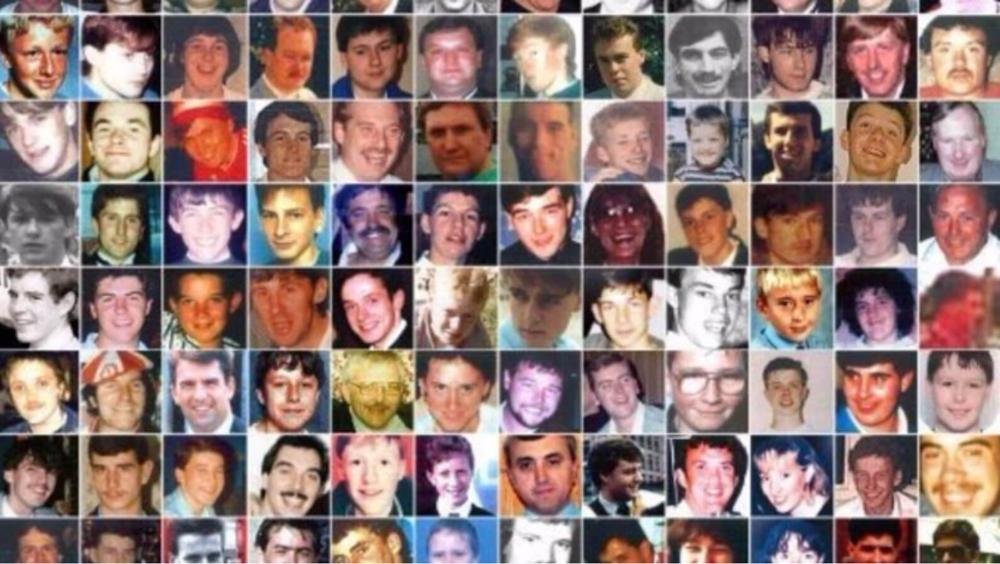
The Hillsborough Bill has taken another step towards the Statute Books, having had its Second Reading on Tuesday 2nd September 2026. In many respects it is a sad reflection that we need a law to ensure that truth is told by officials paid by taxpayers. But perhaps this new law will change a culture which has been self evident in too many public tragedies, including Hillsborough, Primodos, atomic test victims, infected blood, Windrush, Chinook, Grenfell, Manchester Arena, Covid, grooming gangs, and Horizon.
This new Bill emerged from the tragedy at Hillsborough on April 15th, 1989, but it clearly has implications that stretch far beyond.
If a new law can bring an end to the depressingly familiar pattern of deflection, cover-ups and concealment, backed up by exemplary penalties adequate to punish outrageous conduct, legislators will at last be able to say that they have done their job and honoured the memories of those who have been the victims.
Lord Alton of Liverpool
House of Lords
1st September 2026
My Lords, I thank the Minister, the noble Lord, Lord Lemos, for the very helpful and wide-ranging discussion we had last week. I also thank his admirable predecessor, the noble Baroness, Lady Levitt, for the time she set aside to see me with the mother and sister of Andrew Devine, who were constituents of mine in 1989. Having sustained terrible injuries, Andrew died in July 2021 from complications relating to the severe brain damage he suffered during the crush, becoming the 97th Hillsborough fatality.
In the debate that I initiated in your Lordships’ House on 13 November 2025, referred to by my noble friend Lady Manningham-Buller, I referred to the hope of the Devine family that there would be one enforceable code of conduct for public officials, backed by meaningful sanctions. I raised this issue last week with the noble Lord, Lord Lemos, and I hope he will tell us what progress is being made in achieving it, and that he will commit to continue to engage with the family, and with the House, on how the code will work and what will actually be in it.
Although this Bill is, of course, about more than Hillsborough, for me the story began in the run-up to, and the days which followed, the catastrophic semifinal played on 15 April 1989. Before the match, I had sent the Government correspondence questioning the suitability of the ground at Hillsborough. In the days that followed, I began asking questions, which went without answer for years and years on end. By way of example, I wrote to Sir Cecil Clothier, then the chairman of the Police Complaints Authority, calling for an independent inquiry, and describing in my letter
“a smokescreen of propaganda aimed at diverting attention from the truth”.
In a note to the chief constable of South Yorkshire, Sir Cecil reassured him that he had done his best to “deflect”—his word—my complaint. It was, as the noble Lord, Lord Faulkner of Worcester, has just said, a classic example of the closing of ranks.
Repeated calls for a fully independent inquiry were similarly deflected with Jack Straw, then Home Secretary, stating in 1998—as we heard from the noble Lord, Lord Howard—that new evidence did not justify a new inquiry. In 2009 the anger erupted when—as the noble Lord, Lord Blunkett, mentioned—the Culture Secretary, Andy Burnham, was booed and interrupted by the crowd at an Anfield memorial service. To his eternal credit, Mr Burnham stayed and listened to the raw anger. That in turn led to the creation of the Hillsborough Independent Panel, under the diligent chairmanship of the Bishop of Liverpool, James Jones, and to the 2017 report that has been referred to, The Patronising Disposition of Unaccountable Power, and its call for the duty of candour. Shocking denialism had become unsustainable.
A Bill to achieve that purpose was then introduced by Mr Burnham, with the Hillsborough Law Now campaign launched here in Parliament in 2022. Along with others, I pay tribute to their unflagging work for truth and justice. It has been quite exemplary.
In 2024, the Joint Committee on Human Rights decided to examine the Bill. We published the report Human Rights and the Proposal for a “Hillsborough Law” and called for the duty of candour. But the JCHR, which I have the honour to chair, also called for proportionate legal aid and representation for bereaved families during inquests and inquiries to match the resources of the state. I hope the Minister will say how we are going to counter the disparity and ensure the equality of arms that other noble Lords have referred to during these proceedings.
The JCHR has also examined ways of enhancing the role of the Independent Public Advocate. I was very struck by what the noble Baroness, Lady May, and other noble Baronesses and Lords as well, had to say about this. We examined ways of enhancing the role of assisting families and victims in the immediate aftermath of major disasters. We were deeply impressed by Cindy Butts, the Independent Public Advocate, and the noble Lord, Lord Wills, both of whom accepted my invitation to give important evidence to the JCHR on her significantly underresourced role. What is the Government’s current thinking on that? During our discussion last week the Minister said, on the advice of his Bill team, that it was possible that the scope of the Bill might be broad enough here in this House for us to bring something on the independent advocate into it.
On Thursday, however, I also asked the Minister about the incorporation of the Hicks rule. In February of this year, the noble Baroness, Lady Kennedy of The Shaws, Andy Burnham and I met Jenni and Trevor Hicks, whose teenage daughters, Sarah and Victoria, both died at Hillsborough. We met for the launch of the Hicks rule campaign, calling for a legal mechanism to correct historic court records that falsely claimed that victims of the 1989 Hillsborough disaster died instantly and endured no suffering. We know that is wrong. Jenni Hicks told our meeting:
“For more than three decades, the law has recorded something about our daughters that we now know simply isn’t true. This isn’t about compensation. It’s about truth. It’s about dignity”.
That meeting was held in the same House of Lords room, Committee Room 1, where in 1992 five Law Lords ruled against Jenni and Trevor Hicks. As part of the process of accountability, how will we ensure that families facing similar battles, often going through hell, will be able to have the public record put straight when historic legal findings have been based on a farrago of lies and do not reflect the truth?
On Thursday last, I also shared with the Minister the story of a mother whose student daughter committed suicide and who is a member of the ForThe100, which campaigns for greater accountability and legal clarity in higher education. Universities and colleges of higher education are in the unusual position of being independent institutions that also exercise public functions. How they will be expected to engage with the new laws, especially at inquests after the deaths of students or, as in the case of Cambridge, for instance, academic staff? Will the duty of candour be fully engaged? I hope that the Minister will write to me, setting out clarification on that. I should declare that I have two honorary unremunerated connections with two Liverpool universities.
We know that this Bill is about a lot more than what happened at Hillsborough. That has been set out by many other noble Lords. If the Bill can bring an end to the depressingly familiar pattern of deflection, cover-ups and concealment, backed up by exemplary penalties adequate to punish outrageous conduct, legislators will at last be able to say that they have done their job and honoured the memories of those who have been the victims. I support the Bill.